
A raw self-examination
PROMETEO
“Prometeo is not a self-portrait. It is an interrogation. I placed myself in front of the
lens without filters, without a role, without protection — looking for something I may
never fully find.”
Read More
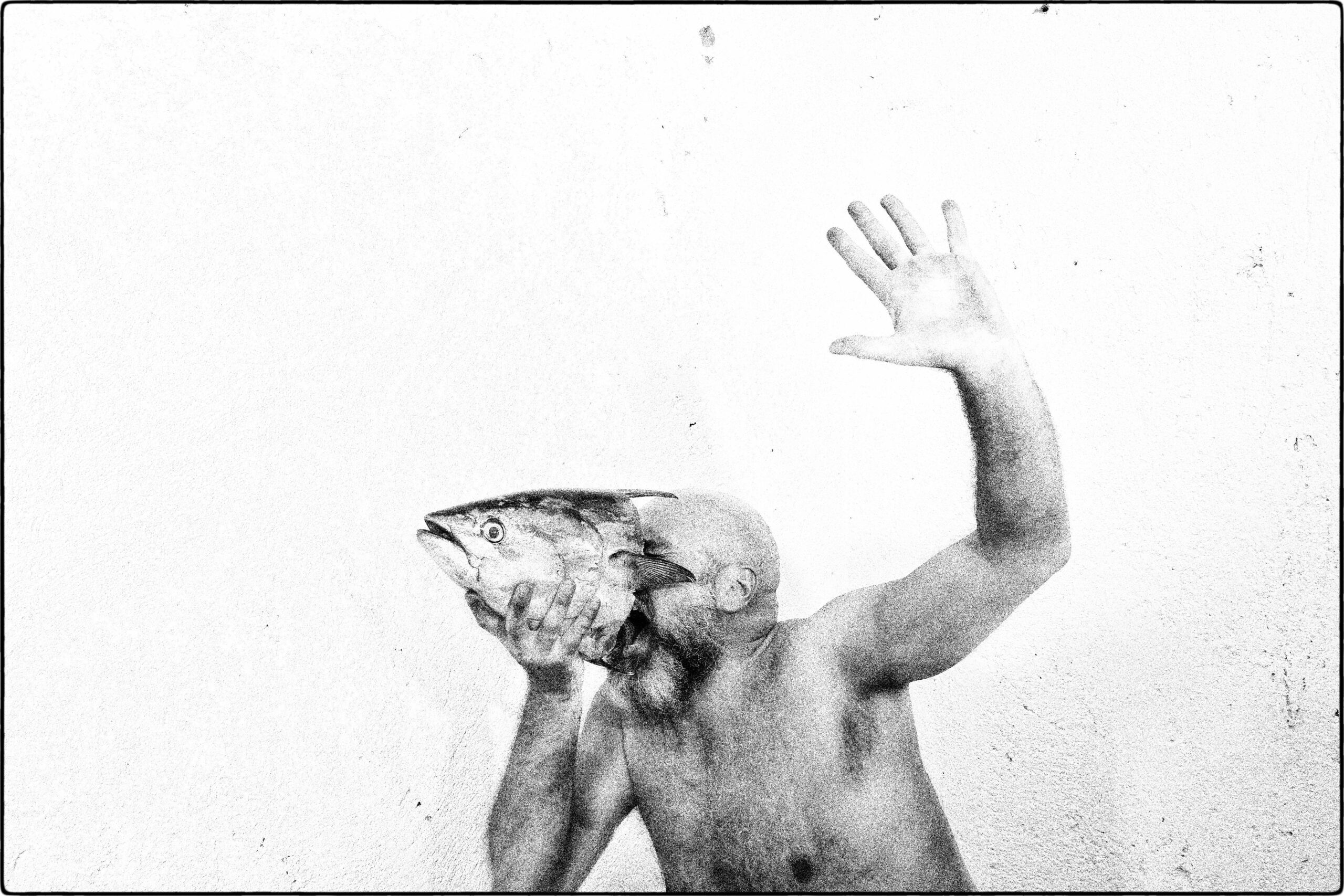
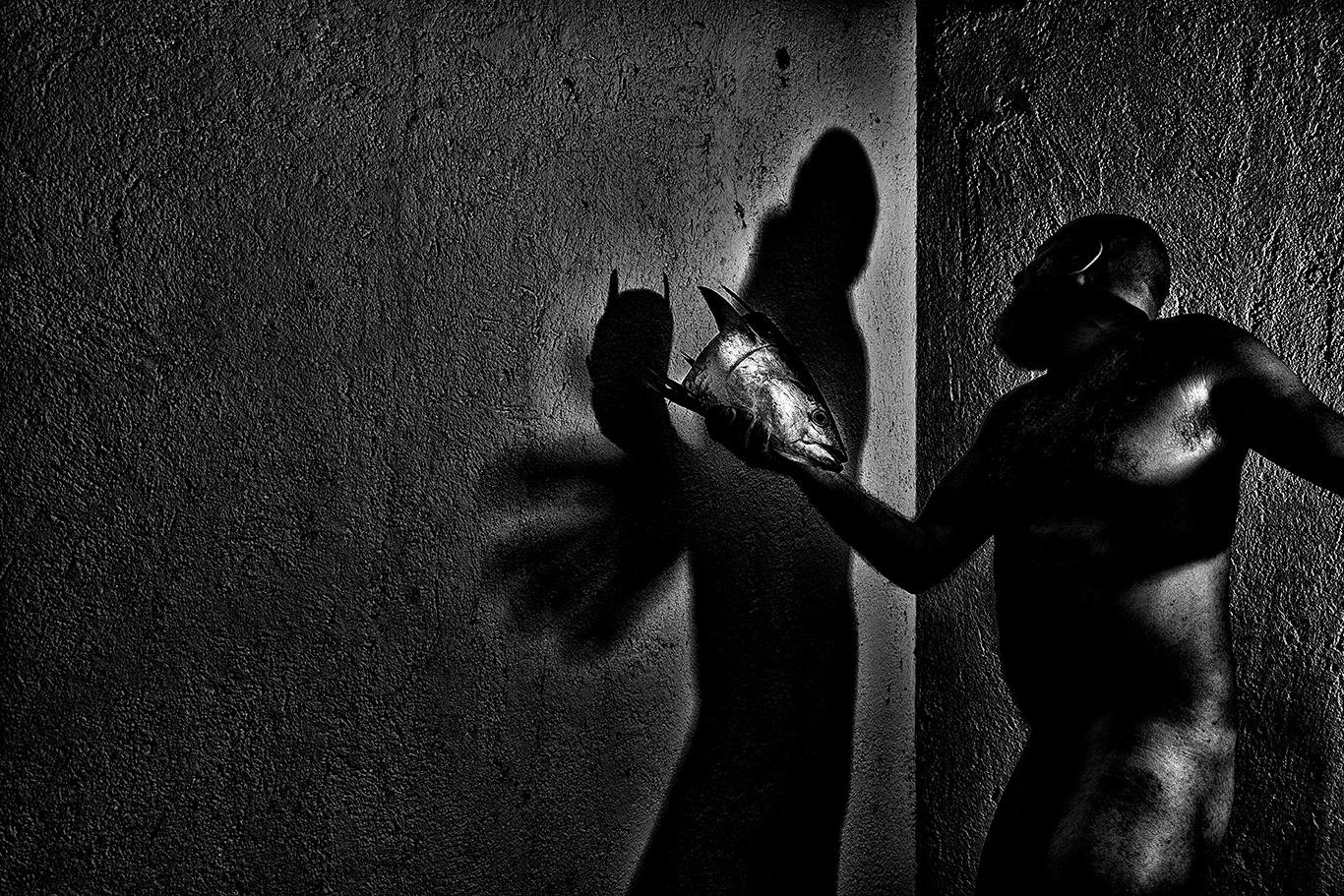
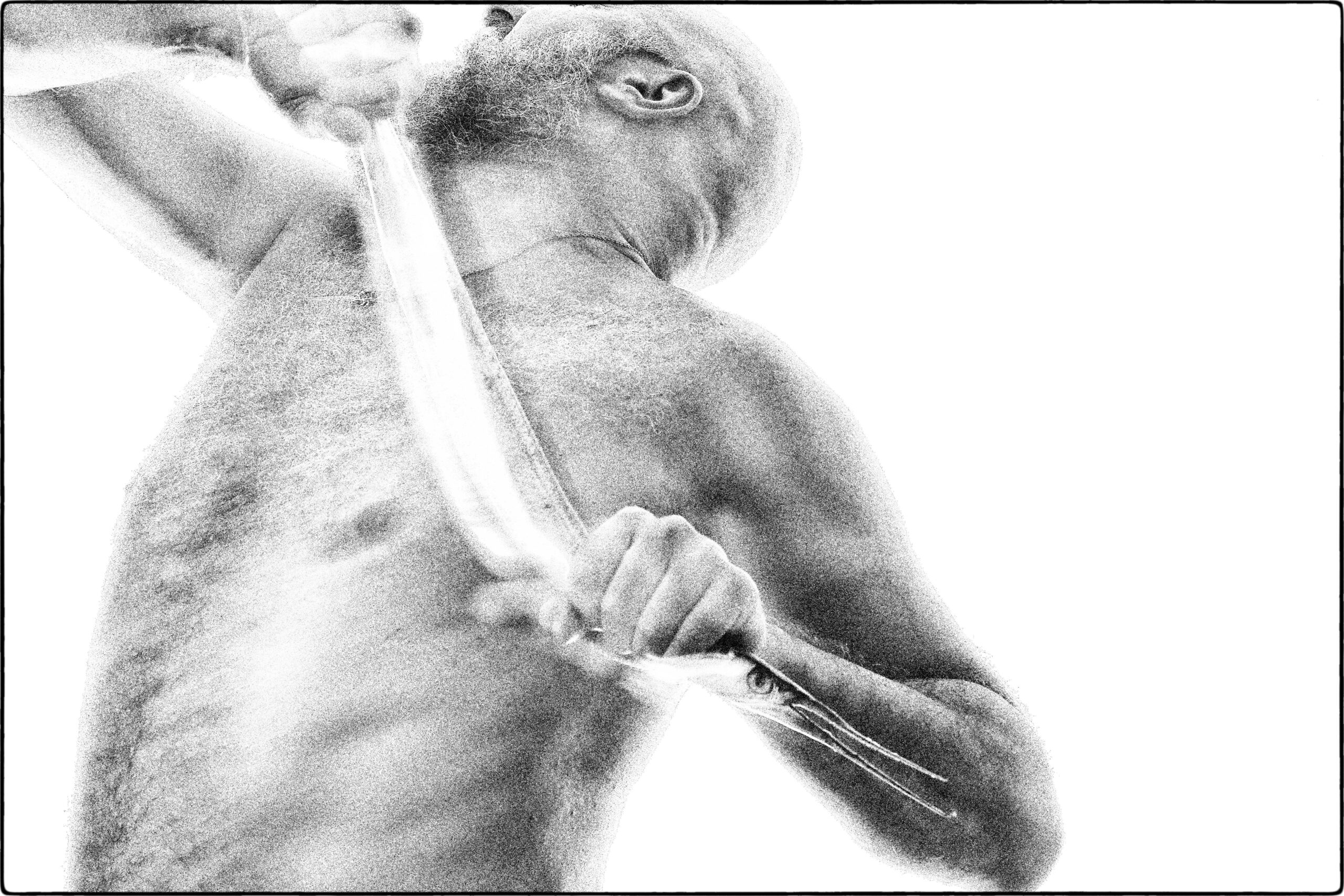
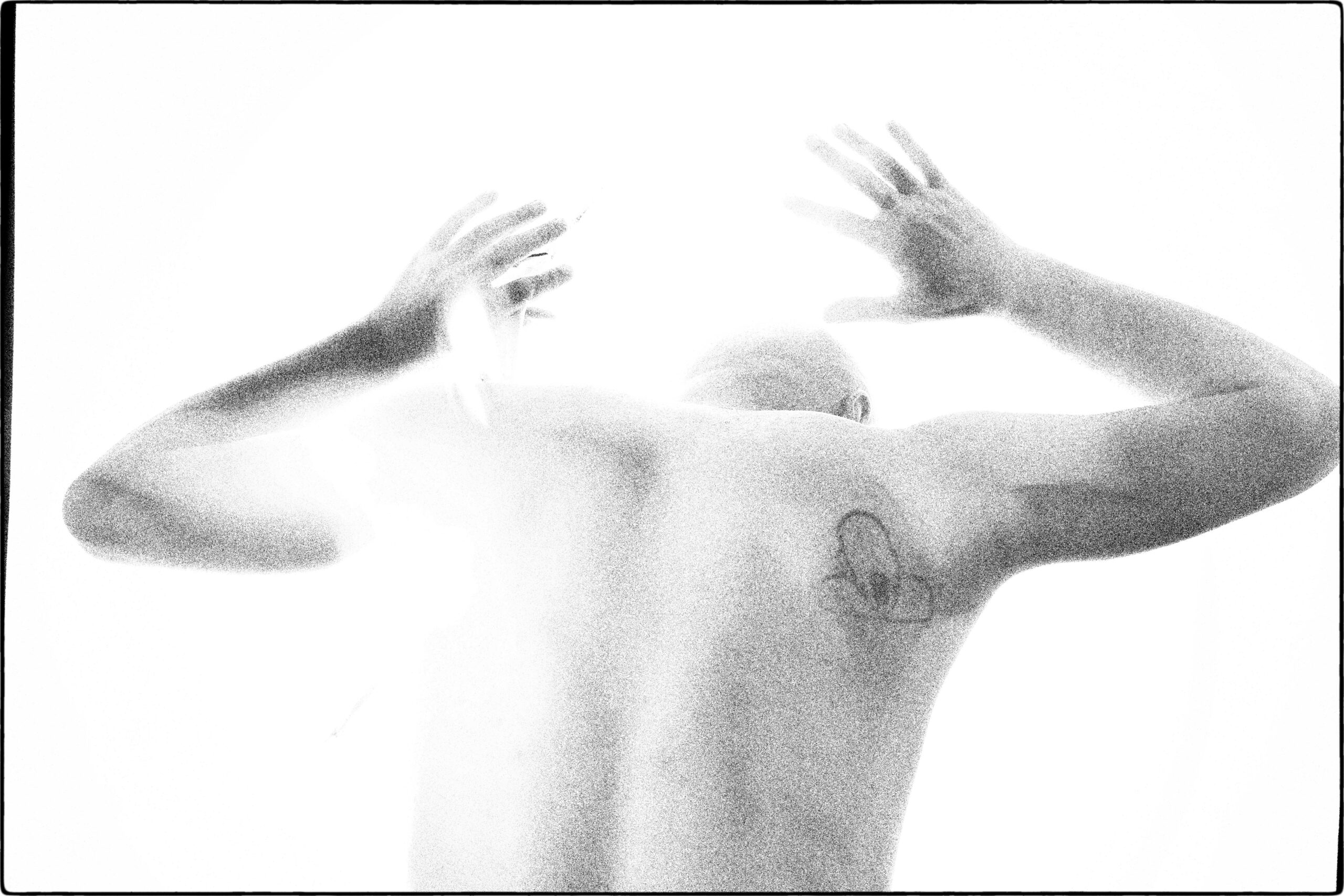
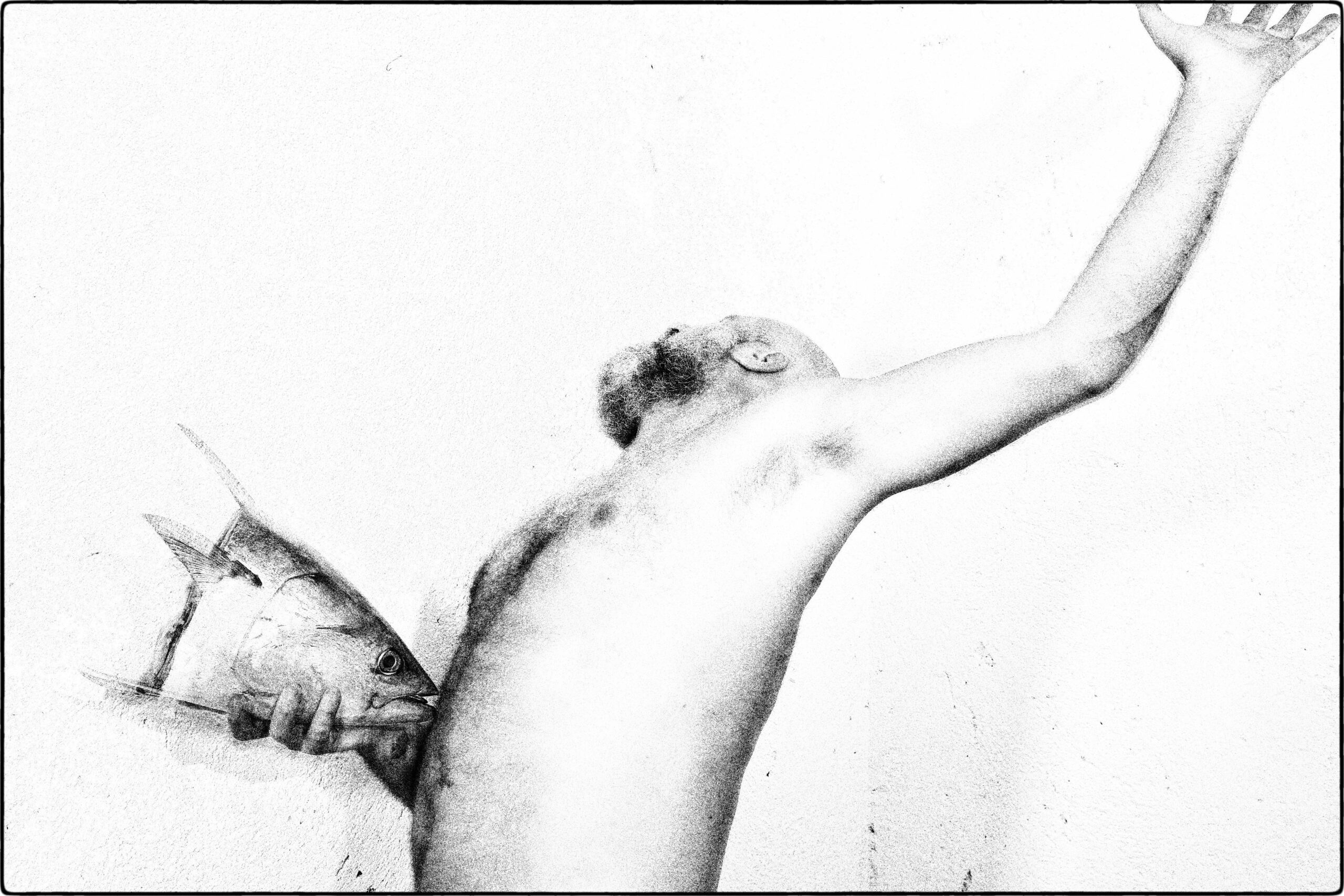
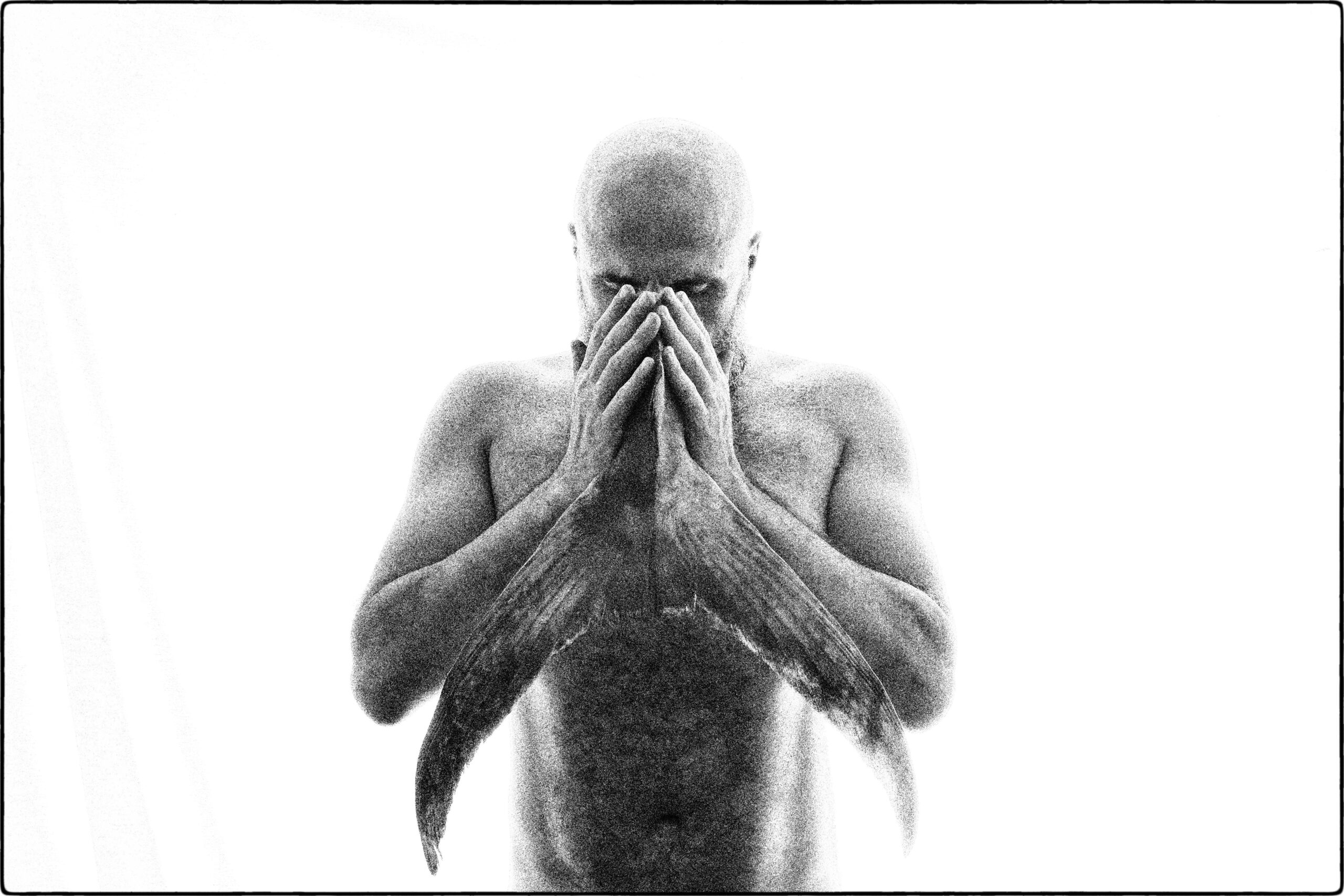
My interpretation of the myth of Prometheus is realised through the encounter with oneself.A stepping out of the shadow, a sacrificial act to put one’s own body to death, an extreme experience to come into contact with the most remote part of oneself. A body that I felt as both limit and excess. Standing in front of the lens is not narcissism. It is an act of responsibility: using one’s own body as material, as a territory of inquiry. The self-portrait, here, does not return a face. It returns a condition.Inasmuch as subject and object of the photograph coincide. Inasmuch as the object is naked, and since the object coincides with the subject, what is portrayed is the subject and the subject alone, precisely in its nakedness, without filters. The object, in other words, is naked because the subject is naked, not for any other reason: for the reason of being a self-portrait. A whole body is portrayed together with pieces of another body — that of the fish — which acts as an alter ego, that is, as a broken counterpart of the whole body. And therefore self-portrait in this sense. It is as though the broken body were the truth of the whole body and vice versa. Thus the self-portrait as a journey from the self to the self — both whole — passing through the pieces of oneself. The pieces of the alter ego (the fish) are pieces of the universe. Hence the identification of a subject with the pieces of the universe: the self-portrait as a journey from self to self passing through the universe. In essence, the pieces of the alter ego are simultaneously less than the subject — insofar as they are only pieces of it — and more — insofar as they are pieces of something external to it, that is, of the universe. They are, in other words, on this side of and beyond the subject. But the subject is precisely, at once, this side of and this beyond of itself. This is why it is a self-portrait.
From a conversation with the philosopher Gabriele Pulli.
-
- PROMETEO
-
- PROMETEO
-
- PROMETEO
-
- PROMETEO